By: Daniel Hoyer
Staff
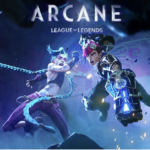
When I was a freshman in high school, one of my childhood bands, Imagine Dragons, released a new single called “Enemy.” What’s more is that it was apparently in a show that was coming out soon called “Arcane,” which was based on the video game “League of Legends.” Prior to this, I had never played League, nor had I really consumed any media related to the game, but Imagine Dragons had a song in this show and I like Imagine Dragons. It was also animated, and I really enjoy animation, so I decided I would make an effort to watch the show when it came out. That’s where it all started.
When I was a freshman in high school, one of my childhood bands, Imagine Dragons, released a new single called “Enemy.” What’s more is that it was apparently in a show that was coming out soon called “Arcane,” which was based on the video game “League of Legends.” Prior to this, I had never played League, nor had I really consumed any media related to the game, but Imagine Dragons had a song in this show and I like Imagine Dragons. It was also animated, and I really enjoy animation, so I decided I would make an effort to watch the show when it came out. That’s where it all started.
Fast forward to winter break of that year, I had just finished the series, and it had been a roller coaster of emotion throughout the entire show for me with everything from death to heartbreak to really good music. But with that final shot of (no spoilers) that rocket launcher just starting to break the glass window and then the screen cutting to black, that’s when I realized that my life had changed.
Of course, being only a high school freshman, I hadn’t entirely learned and understood some of the concepts that “Arcane” was trying to push to me, but as a high school freshman who was diagnosed with depression and GAD not even a year earlier and still trying to figure out what he wanted to be, this show would be the catalyst for me finding out who I really am.
Jump to December 2024, and I’m now a senior in high school and I had just finished the second season that had been released a couple weeks ago. I was older than when I had watched the first season, so I had now understood some of those same concepts and themes that Arcane was trying to push to me from the first season. This allowed me to understand why some of the characters did what they did. It allowed me to understand what was going on in the real world, and it even allowed me to find out more about myself and who I really was.
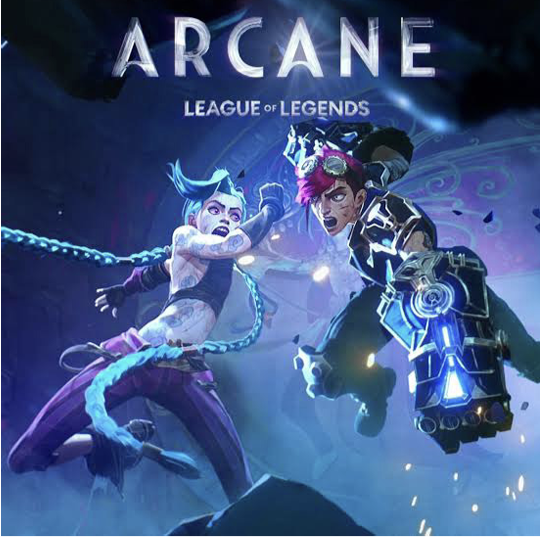
But it’s not just the themes and messages behind “Arcane” that makes it a favorite in my book. The animation and artwork of this show are unparalleled.
Somehow, while being a fictional universe with everything from mechanical arm cannons to a device that shoots trade ships across great distances at the speed of light, it feels so real. The way the characters move with fluidity brings a kind of realism that is very hard for animated media to portray and that you really only ever see with live action media.
The way the colors work in the show is something that cannot be overlooked. Looking at basic color schemes, the dark and muted colors of Zaun carries the feel of a forgotten, crime-ridden city, but the occasional neon colors gives you the idea that nothing is ever dull in Zaun and that something is always happening.
Mirroring this, the city of Piltover is built on colors of, mainly, white and gold, symbolizing a city that always strives for tomorrow with the occasional dark shadows showing how there’s always something shady going on. With these color schemes, the show gives the idea of how different the two different cities are, while also showing how those same, contrasting cities aren’t that different from one another.
With only two seasons with nine episodes each, “Arcane” does something that many animated media dream of doing: It breaks the rules in a way that changes them.