By Nolan Morrow
Staff
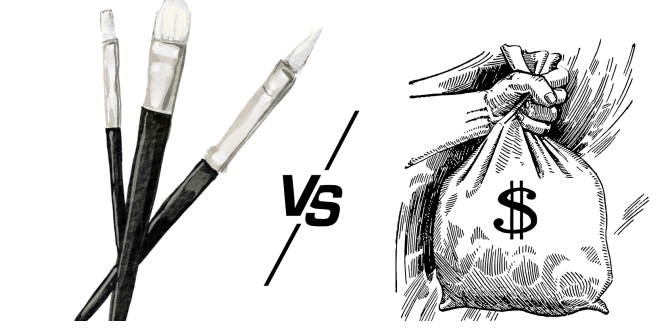
Art has always been tied to money, but lately it feels more openly shaped by market forces. Social media plays a big role in this. Artists often rely on algorithms, trends, and engagement to get noticed, which pushes them to create work that performs well instead of work that feels personal or experimental. Instead of focusing only on expression, art starts to feel more like something designed to sell.
At the same time, the cost of living and unstable creative careers make it harder for artists to take risks. Many end up sticking to styles that are proven to make money or appeal to larger audiences. Big industries like film and music are also driven by investors who expect profit, which leaves less room for originality.
Because of that, art can start to feel repetitive or safe rather than bold.
There’s also been a shift in how art is valued. It’s often judged by popularity, price or how viral it gets instead of its meaning or impact. Even the word “content” shows how art is treated as something to be consumed quickly. Still, good art almost always starts underground, outside of mainstream pressure, where artists have more freedom to experiment before it gets picked up and commercialized.
Capitalism has made art more accessible in some ways, giving artists bigger audiences and more opportunities. But when money becomes the main goal, it inevitably shapes what gets created, and that tension between expression and profit continues to define modern art.