By: Hiba Obeed
Art & Life Editor
Q: Why art history?
A: When I was in high school I worked at a boy scout camp and I taught merit badges there. I found out very quickly I loved to figure out how to pass the knowledge I have onto other people. It’s like a little logic problem for me – when I see someone confused, I want to get them from where they are to where I need them to be. I knew I wanted to teach from high school but I didn’t know I wanted to teach art until I finished with my undergraduate degree. I took one art history class my very last semester and went to graduate school immediately after to pursue it.
Q: Is your background in art?
A: My undergraduate degree was in political science, and I took art history as an elective my last semester of college. I knew there was no turning back as soon as I did it. So kind of not, it was serendipity.
Q: What was your dream occupation or craft as a child?
A: I wanted to be a chef, I can’t remember why. I guess I liked to cook and my mom liked to cook. I liked hanging out with her.
Q: Is there a particular common misconception you hear about art history that you would like to refute?
A: I come into my classes here with the notion – whether it’s true or not – that my students think art is for the elite and that it might not have a lot to do with them. I do my very best to have them leave knowing that is not the case. It is relevant and made for everybody. Whatever their responses to the art are, it is as valid as any art historians.
Q: Has anything been weighing on your mind recently?
A: How shitty the Trump administration is, specifically with regards to my students. I worry that young people aren’t going to realize that the world doesn’t have to be the way it is right now and that it can be changed.
Q: What do you want people to know about you?
A: I want people, especially students, to know that when I was in high school and college, I could not have possibly imagined the life that I’ve made for myself as an art history professor. The choices you make when you’re young can take you anywhere you want them to.
Q: Who is your closest companion/friend?
A: My husband Doug. We’ve been together for 28 years, married for 12.
Q: What level of power over people is too much?
A: I think any level of power that makes people their own power is diminished is too much. I like the idea of influence but I don’t like the idea of forcing or limiting choices on people.
Q: What do you believe is the importance of understanding art history?
A: We live in a world where people use images constantly to try to sell you ideas and products. If my students leave with some semblance of how images got to the way they are, then they’ll see who’s trying to shape their brains in what ways and think more intelligently about that.
Q: Do you have any big fears or anxieties?
A: No.
Q: What is your happiest memory?
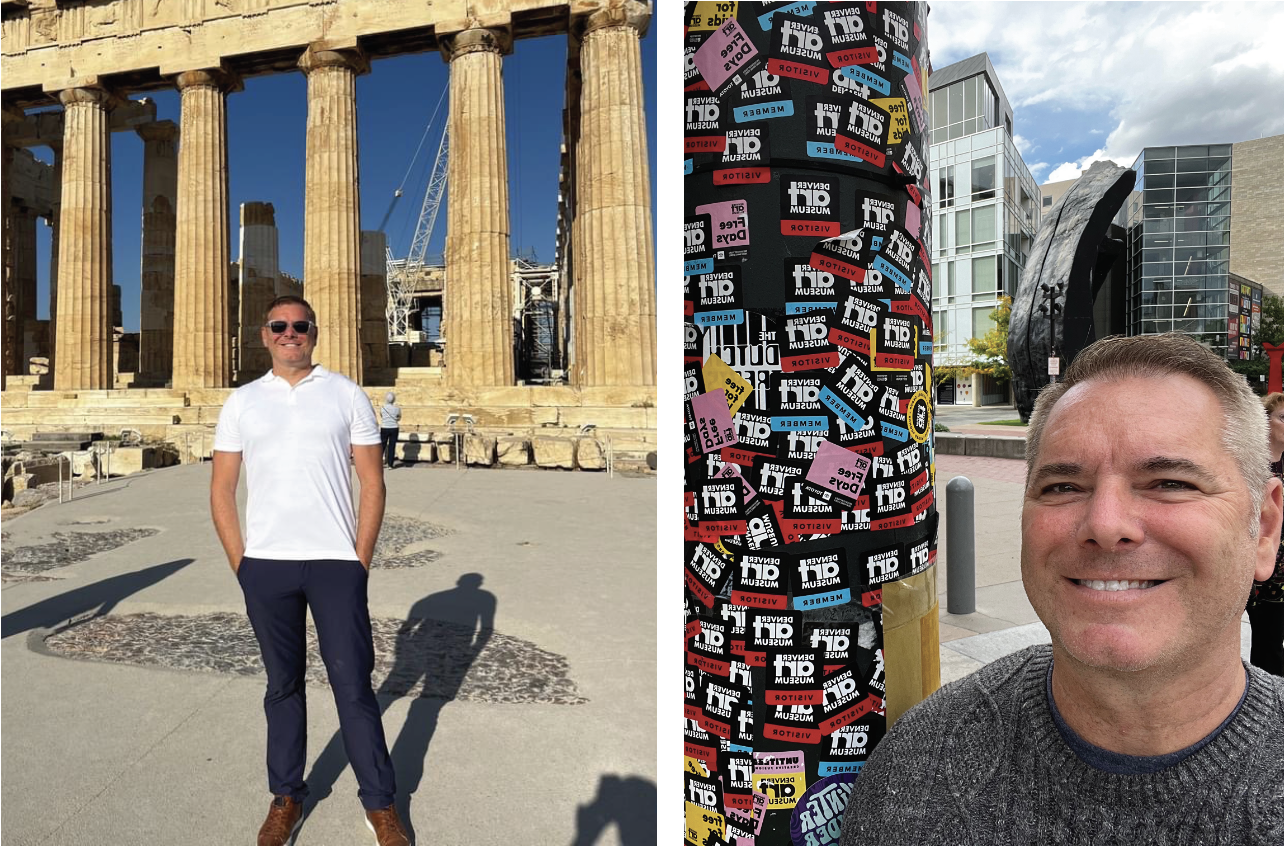
A: Getting engaged at the top of the Eiffel Tower.
Q: If you could do anything at all without any financial or physical limitations, what would that be?
A: I would do exactly what I’m doing right now, only I would do it faster.
Q: Who do you trust the most?
A: My husband Doug.
Q: Have you participated in anything you view as counterculture?
A: I think academia is a bit of counterculture. The fact that we live in a time and place where the government is trying to shut it down is good evidence that it is counter culture.
Q: Why did you initially pursue political science?
A: I had no idea. I wanted to get a college degree and I figured I’d figure it out from there. I changed my major in college on paper, officially, seven times. I had no idea what I wanted to do. Business school lasted only a semester. I felt like I couldn’t justify a degree in the humanities, so political science felt like it opened up government opportunities, but art history grabbed me immediately.
Q: What’s something about you that people might not expect?
A: People might not expect that I designed my own house twice. I’ve never taken interior design but I teach so I must have studied the history of architecture as well as art, and that was very impactful on me
Q: Should bombs exist?
A: Nope.
Q: Thoughts on American imperialism?
A: My first thought is that I wish more Americans knew we were imperialists. I wish more people understood that if you are an imperialist, it suggests the weakness of the things you don’t have. There is no need to imperialise people if you don’t need things from them. Imperialism has an awful way of leading people to think that people from other cultures don’t matter as much as they do. It’s very hard to have imperialist attitudes when you go to experience the rest of the world.
Q: What would you change about American culture?
A: I think it would be healthy for American culture for culturally conservative people to be more honest about how they feel about the world. I think they lie to themselves and that means they lie to the rest of us about what they’re really after. We all have the right to see some of the disgusting ideas in their heads.
Q: Other than your career or education, what are you most proud of?
A: Maintaining a 28 year relationship.