





By: Elizabeth Cleary
Managing Editor
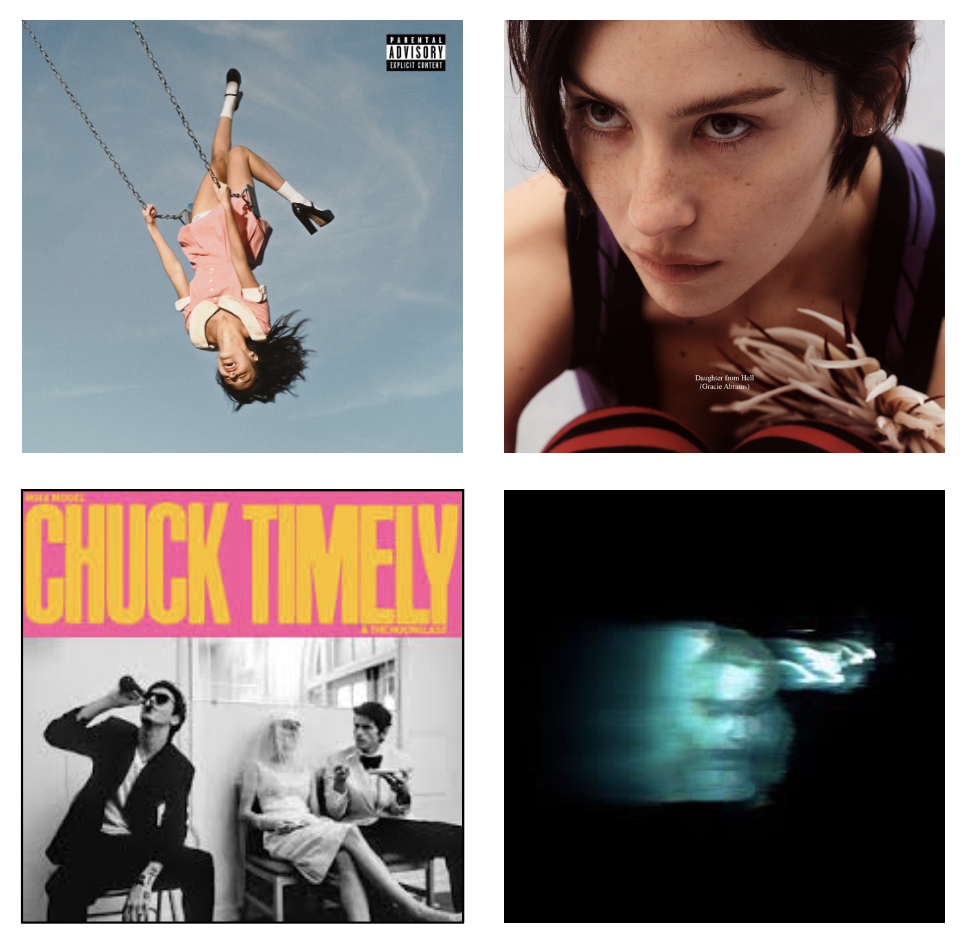
It was a good summer for people who like pop music. Olivia Rodrigo’s “you seem pretty sad for a girl so in love” soundtracked June; “Daughter from Hell” by Gracie Abrams dropped mid-July, and “Chuck Timely & The Hourglass” by Role Model and “Lost Weekend” by Phoebe Bridgers closed out August.
While none of these albums quite shook the culture like “BRAT” by Charli xcx did in the summer of 2024, all of them had their moment, and I have plenty to say on each.
Rodrigo’s “you seem pretty sad for a girl so in love” traces the entirety of a relationship, from tracks discussing first-infatuation to portraying a slow heartbreak. Upon release of her first single, “drop dead,” in April and her second single, “the cure,” in May, Rodrigo quickly set the tone for the album. Moving away from the fiery punch of her earlier work, the album is more subdued and thematically focused. Tracks such as “purple,” “the cure,” “begged” and “what’s wrong with me” move the album seamlessly from seeming-love songs into the broader themes of anxiety and loss of self that permeate the entire work.
I love sad songs and music that makes me think, but I will admit that “you seem pretty sad for a girl so in love” didn’t immediately grab my attention because of its subdued nature. In my first couple of listens, the songs that stood out to me most were “expectations” and “my way” (and not for nothing). These songs both have that explosive energy that Rodrigo fans are familiar with. They’re fun, upbeat and a little angry – easily sticking out from the rest of the album. If I had one critique, it would only be that I wish there were more like these.
Well, I do have one other critique. Robert Smith’s feature on “what’s wrong with me” left me disappointed. I like “The Cure” as much as the next person, but something about his voice mixed with Rodrigo’s didn’t work. The chorus felt almost muffled with them both singing, and Smith’s verse sounds out of place. To me, his feature is akin to Sabrina Carpenter putting Dolly Parton on “Please Please Please.” Not a good vocal mix.
“Daughter from Hell,” Gracie Abrams’ third album, discusses personal growth, heartbreak and the transition from youth to adulthood. Known for her confessional lyrics and softer indie-pop sound, Abrams continues to deliver songs that are lyrically rich and full of raw emotion. Songs such as “Daughter from Hell,” “Humming” and “Cold Goodbyes” emphasize this depth on the album.
That said, it seems to me that Abrams has started running out of unique ways to express her emotion. Throughout the album she relies on tired metaphors (such as sinking ships or twisting knives). Some of the songs on the album feel unnecessary because of this, and I wonder if it could have been strengthened by dropping or combining tracks.
One of my favorites from the album is “Minibar.” In this track, Abrams shows off her witty and verging-on-silly lyricism, showing that she can have fun amidst an emotionally rich time in her life. But because “Minibar” is the only track on “Daughter from Hell” that does this, it may have been better as a stand-alone single.
“Chuck Timely & The Hourglass” by Role Model (Tucker Pillsbury) explores the intricacies of timing and the highs and lows of singledom. Relying on an alter ego, Chuck Timely, Pillsbury showcases these themes in the album through this invented persona. The tracks on the album lean more Americana and country-pop than his previous works, establishing a playful charm. In “Love I You,” this playfulness is seen in the spoken back-and-forth bit featuring Dakota Johnson. The singles for the album, “High Hopes 3000” and “Joy,” also have a breezy and upbeat energy to them that is reminiscent of “Sally When The Wine Runs Out,” one of Pillsbury’s breakout songs.
I found this album to be very fun. Pillsbury started leaning into country-pop in his previous album with songs like “The Longest Goodbye” and “Old Recliners,” and it seems to be working for him. Not only did he create a cohesive sound for the album, but in putting together a character and narrative, he brought a concept to life.
Now, could some of the tracks be shortened? Absolutely. The amount of four minute and 30 second songs threw me off on my first couple of listens. With many of the tracks keeping the same mid-tempo pace and heavy romantic themes, there was a slight drag near the end of the album. But “Chuck Timely & The Hourglass” definitely caters to a specific vibe, and it hits how it aims to at the end of the day.
Phoebe Bridgers’ “Lost Weekend” came after a six-year gap since her last solo album. The record centers around grief, love and acceptance. The album is dedicated to her late father, and songs such as “Lost Weekend (Reprise)” and “Still Standing” reflect on her relationship with him and the reality of death. Bridgers’ also brings her relationship with Bo Burnham into the album, featuring his contributions on various songs and heavily referencing him in “Bobby.” The album makes use of effects and vocal layering to set it apart from previous works and evoke feelings of detachment. This can be seen in “The Outside” and “Never Going Back!”
After Bridgers’ long-awaited return to solo work, she has more than delivered. “Lost Weekend” is an experience through-and-through. Listening from top to bottom, the organization of the album is clear as songs blend into one another and serve to carry the listener through complicated relationships and emotions. I have no notes.
I am happy to report that pop music is alive and well. Summer may be over, but these albums are sticking around on my Spotify.