






BY: ELIZABETH CLEARY
Managing Editor
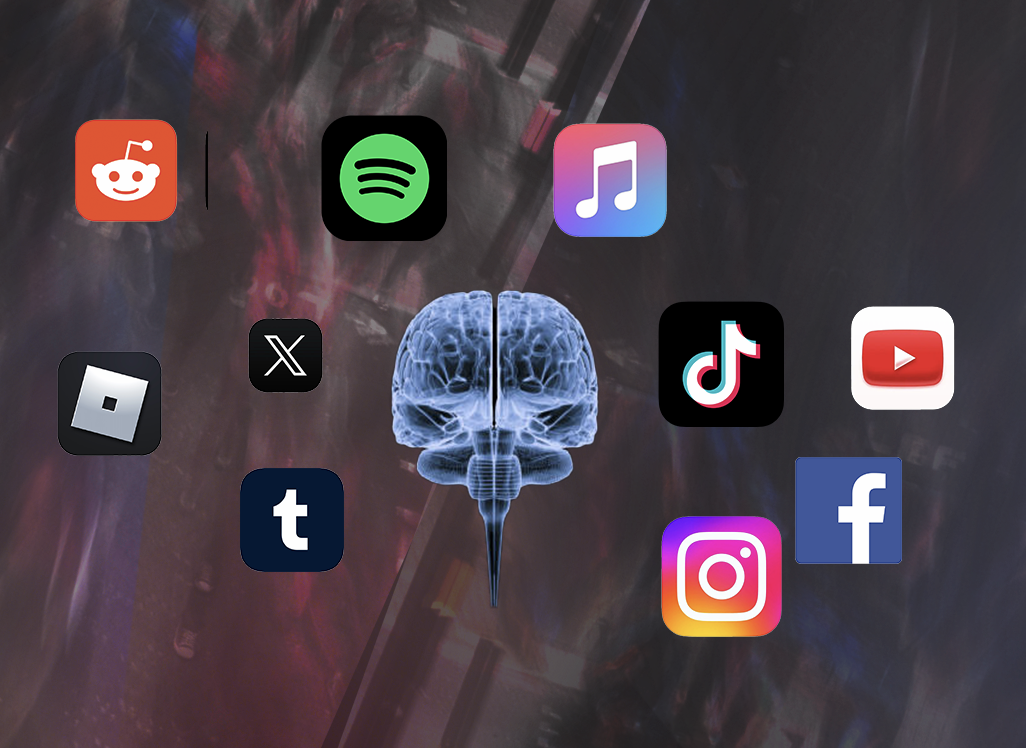
It’s easy to dismiss our ever-shortening attention spans as a byproduct of the digital age, but more and more it seems they are the result of intentional design: curated algorithms and social media app features that maximize engagement at the detriment of our long-term focus.
One only has to look as far as platforms like TikTok, Instagram Reels and YouTube Shorts to see this intentional design at work. TikTok alone boasted approximately 170 million U.S. users in 2024 according to TikTok CEO Shou Chew. All of these users experienced the app’s core content format: short-form videos. These user-created videos typically last from 15 to 60 seconds, making them easy to consume quickly and in large quantities. Here is where the problem lies.
Being exposed to constant and rapid ideas, visuals, excitement and novelty is doing more harm than good. According to Dr. Anna Lembke, psychiatry professor at Stanford University, consuming digital media releases dopamine in the brain, kickstarting a good, rewarding feeling in the consumer. But these dopamine hits are not sustainable. Eventually, the consumer’s brain gets used to the content they are consuming, and they start to engage with digital media not to feel happy or satisfied, but to feel normal. Attention spans diminish through this dopamine crash process.
Of course, it doesn’t help that social media platforms cater to this problem. Looking at TikTok again, the 2x speed feature is a prime example of how the design of the app works to bolster shortened attention spans. On a TikTok video, a user merely has to hold down on the left side of the screen to speed up the video. One might think this is beneficial as it offers those with short attention spans the option to consume longer video content more easily. But that thinking is incorrect. In the long run, the 2x speed filter makes it harder to consume and focus on content in which the speed cannot be altered. Furthermore, as a user adjusts to watching videos at 2x speed and that becomes their new normal, the same dopamine crash cycle from earlier will occur.
The shortened attention span of the modern age, and especially amongst Generation Z, really becomes detrimental when it comes to consuming longer content. Being unable to focus on reading a book for a class, listening to an hour-long lecture or completing a task can harm an individual as they move forward with their education or career. Having a good attention span is crucial to focus and success.
This sparks the question: how can we fix our attention spans? The solution is simple, but it requires dedication.
In order to “fix” an attention span, a person has to start consuming long-form content without breaks to scroll on social media or sidestep into other distractions. Sitting through a movie without checking your phone or writing an essay without switching tabs to scroll through YouTube Shorts is the first step to taking control of your attention and restoring a healthy dopamine balance in your brain.
Recognizing the intentional design in the technology you use and the content you consume can ultimately help you resist it.