






#GiveBlueyAChance
BY: DANIEL HOYER
Staff
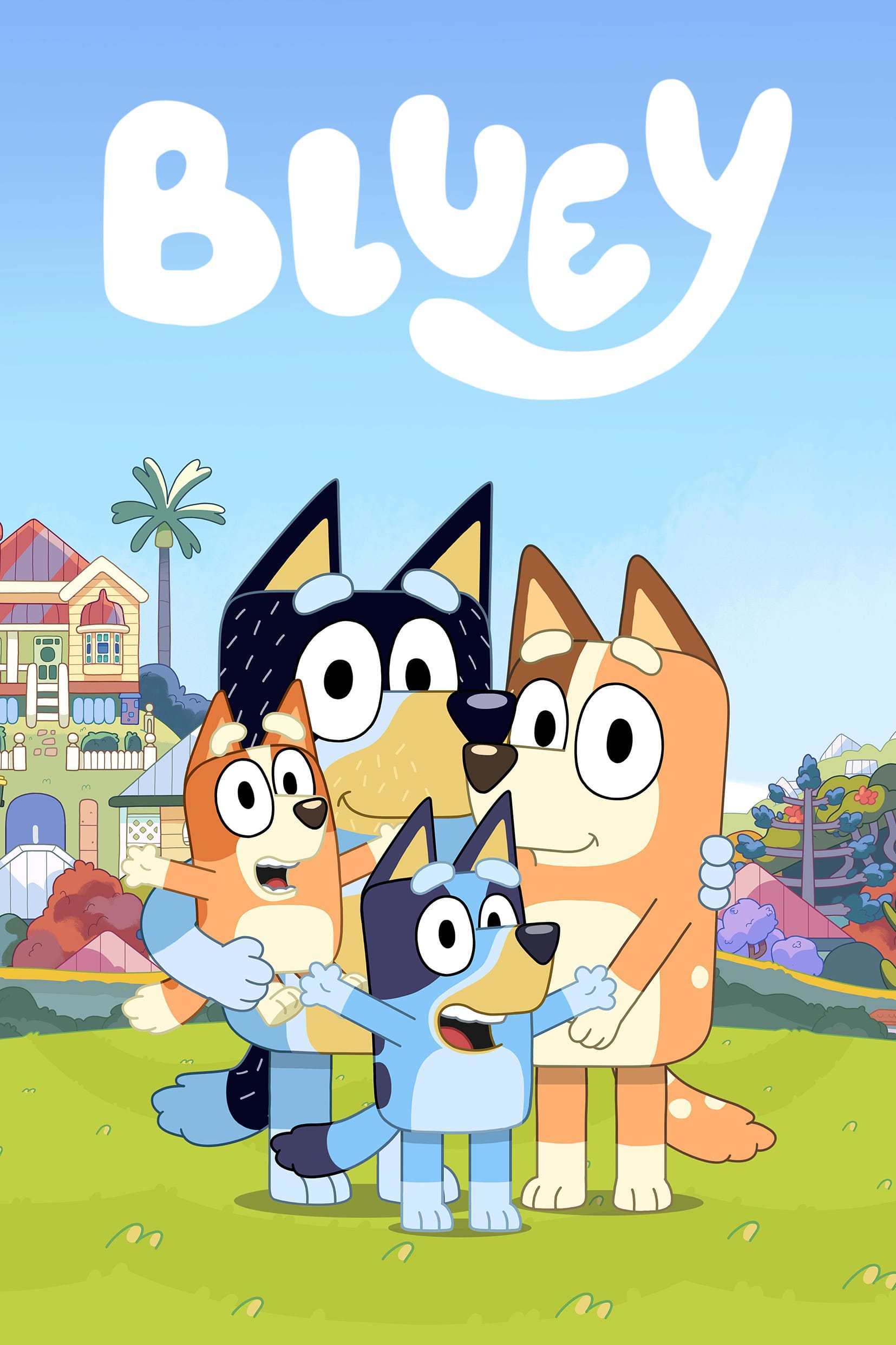
Whether it’s seeing some random clip on TikTok or Instagram Reels, or seeing their merchandise whenever you go to Target, you’ve no doubt at least heard of the Australian cartoon “Bluey.”
The premise of the show is simple: it’s about two dog sisters, Bluey and Bingo, 6 and 4 respectively, just living life, having fun, playing games and learning lessons along the way, but the true meaning of the show lies deeper than that.
Before talking about Bluey as a cartoon, the question must be asked: What is a cartoon? In a literal sense, a cartoon is a drawing whose characters are often drawn in disproportionate ways. While this is true, this really only refers to things like comic strips– not animated shows. As animated shows and movies started to take over the medium that comic strips once dominated, the meaning evolved into shows or movies that rely on a series of illustrations for its animation.
While that is the technical definition of a cartoon, what a cartoon means to each individual person varies (warning: I’m going to get cheesy). For me, a cartoon is an animation that makes you feel something, whether that be happiness, sadness or even just amusement. For some of us (if not, most of us), cartoons are the foundation upon which our childhood is built upon. Whether it was “Ben 10”
on Cartoon Network or “Mickey Mouse Clubhouse” on Disney Jr., cartoons allowed us to appreciate our childhoods as children. Not to say that live-action media didn’t, but cartoons did it in such a way that, arguably, can’t be replicated by any other means.
With its first episode airing in 2018, it’s safe to say that those reading this didn’t grow up with “Bluey”. So why is an adult writing about a cartoon mostly tailored toward those who are in preschool and kindergarten? Because, while it’s mainly tailored toward young children, there are aspects of it that were made for even adults.
For example, there is an episode (S2 E47) where Chilli (“Mum”) is having a flashback to when Bluey was a baby. In this episode, Chilli is unintentionally “competing” with the other moms to have her kid crawl, walk and talk before all of the other kids. When Bluey is slow in achieving these milestones, Chilli then takes her to the doctor several times to have her checked on. Every time, the doctor tells Chilli that Bluey is completely fine. Despite this, Chilli keeps worrying that she’s a bad mother. It’s here when Coco’s mother (Bella) comes to Chilli and has a talk with her about raising children, which culminates in Bella telling Chilli “You’re doing great.” At this, Chilli starts crying. This is far from the only example of there being lessons for parents in the show, but it gives you a sneak peak into one of the many ways that proves that the show isn’t just for young children.
Like any good cartoon, I ended up having a special, unique connection with the show. Without going too far into a personal backstory, I was diagnosed with
generalized anxiety disorder about five or six years ago. One of the most common symptoms I experience during panic attacks are heat flashes throughout my whole body. While I’ve gotten a lot better at managing these attacks, the heat flashes are almost always accompanied by the worst kind of panic attacks. So when I got heat flashes while watching a few select episodes of “Bluey,” it came as a shock to me when they weren’t followed by any sort of panic attack.
To this day, I don’t know what happened, but “Bluey” made one of my most feared symptoms almost null to me. These heat flashes are never going away, nor will the panic attacks, but the fact that a kids cartoon made me feel like that, cemented it as one of my favorite cartoons of all time.
I’m not making you watch “Bluey” but I am asking you to give it a chance. All I’m saying is that they don’t award the title of “Most Watched TV Series of 2025” to just anyone.