



New buildings on campus are fully open for business
BY: JACOB POLITTE
Online Editor
After over two years of demolition and construction, two new “STLCC Transformed” buildings at the Meramec campus are complete and fully open for business. The Financial Services Education Center and the Emerging Technology Center were first partially opened in June while work continued over the summer. But now the buildings are fully open for business, all departments have moved in and classes are now being hosted.
Meanwhile, on the other side of campus, heavy amounts of renovation work continues on the Student Center, although the cafeteria kitchen is now complete as of press time, while work continues on the atrium and first floor.
Work on the second floor is set to begin shortly, and some departments have moved already, including The Montage, which has now relocated to the old Testing Center space on the first floor of the Communications North building, specifically CN-122. The Campus Life department is set to move sometime in October to their new space on the first floor.
In a smaller change, the “North” in Communications North appears to have been struck from the building’s signage, though room numbers in the building still have “CN” numbered rooms.
The new Testing Center is located on the third floor of the Financial Services Education Building, specifically in FS-310. In addition to the Testing Center, administrative offices, admissions, advising and financial services have also moved into the building. Clark Hall has been mostly vacated and the west entrance has been closed; only SARC, Counseling and the Access Office remain and only the back entrance remains accessible.
Campus President Feleccia Moore-Davis and Vice President of Student Affairs Keith Ware, as well as their respective administrative assistants, now share a massive office suite in FS-201. Previously, the two campus leaders had separate office suites on the second floor of Clark Hall. Now, everyone working in the space has a view overlooking Big Bend Road while work continues on landscaping behind the buildings. Moore-Davis said that the “roundabout” and parking lots will return as a part of that space, with the campus bus station set to return to the roundabout as well.
“I don’t have a timeline on that,” she said, “but they are working diligently on those now.”
One casualty of construction over the past few years was the iconic Meramec bush that faced Big Bend Road, and Moore-Davis said that it won’t return, although new, native seedlings will be planted in its place.
Another new kind of room is the Entrepreneurial Center, located in FS-307. Moore-Davis said that the purpose of this room, other than serving as a base of operations for the VITA Tax Service during tax season and a classroom when needed, is to support students and businesses looking to grow.
“We will also do workshops for entrepreneurs and startups in the Kirkwood area,” she said, “because there are a significant number of small businesses in the area that we wanted to support and help them grow. Because they’re part of the economic development for the area.”
Another new kind of room is the Gaming Room, which Moore Davis says will eventually be the site of a new, innovative program. The game design and development program will be a collaboration between graphic communication and computer information technology departments.
“We are preparing, through graphic communication and CIT working together, to create a game design and development program,” she said. “Graphic design will do the game design aspect of it, and through CIT, the students will have two pathways they could do: design or development of the game. So through software development [and] database development, students will have the ability now to create games, and then they will work together with these two programs at the end, to give students a significant experience that collaborates between the two programs. But that program, we have put it in motion to be approved.”
Moore-Davis said that a Fall 2026 start is being targeted for the launch of that program, and that those spaces on the third floor of the Emerging Technology Center can be used as additional classroom space in the meantime.
“When we built the building, we prepared for that inevitability of the development of that program, of those programs, because it’s actually two,” she said.
Moore-Davis also spoke about the new Library in the Emerging Technology Center.
“I love the setting of the library when it comes in,” she said, “and the students are now interacting with the library in a very different way. As you know, for three years, we had a very small, quaint library through the construction, and now it’s just great to see how students have gravitated back to the library, and it’s just a beautiful space.”
Moore-Davis also spoke about the new “green roof” on the second floor of the Emerging Technology Center, which overlooks a newly constructed and modernized greenhouse.
“[It] is absolutely beautiful,” she said. “It will be used for events, social events, and also students can hang out there. You can even have meetings out there. When it’s finished, our horticulture program will also be supporting that green roof, too. They will actually support it through the work that they already do. So they’re going to ensure that that always looks great there.”
Regarding the new greenhouse, Moore-Davis describes it as a 21st-century facility with advanced technology for plant growth. The horticulture program now has a state-of-the-art grow room and a farm with raised beds for practical learning. Moore-Davis believes the new facilities will attract more students to horticulture programs and increase visibility.
“Oh, my God, you know, it’s almost night and day from where we were and what we have [now]. I think one of the beautiful things about the greenhouse is that it has all the technology, all the things that they need to ensure that these plants grow successfully and that students can learn by the environment that they create within that,” she said. “I also want to bring attention to the labs that horticulture has as well, and they now have a grow room, and that grow room is state of the art as well. So everything can be kept at a particular temperature and it and students can watch it grow. They can nurture it, and they can understand what happens and what doesn’t happen to the plants.”
She continued, “But also bringing your attention to that, they also have a farm over there as well that they are still working on, but there will be raised farm beds, so even students who have just a general interest, they may see something. They can learn something from what’s actually being portrayed outside of the greenhouse, which will be through our farms. […] it’s going to be beautiful and very interactive. If you ever just had questions about it, or have had some interest level, I think that that is something that could prompt you to even take a course that you never really thought about before.”
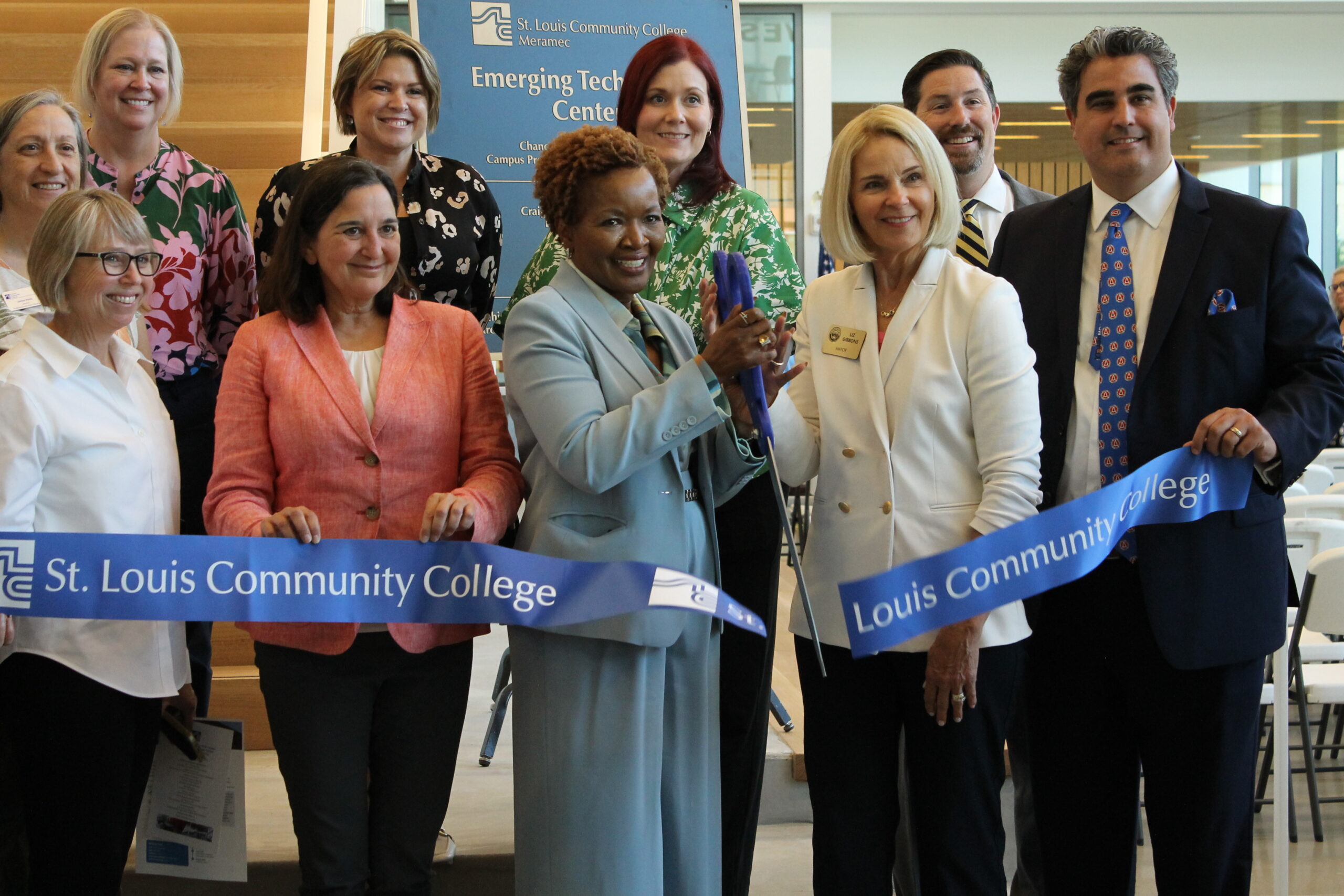
A formal ribbon cutting and media tour for the new buildings took place on Thursday, August 28th, with a formal Open House event scheduled to take place sometime in October.