


The ongoing construction around campus has presented some challenges.
BY: GRETA MCGLAWN
Graphic Design Editor
It has been one full semester since the grand opening of St. Louis Community College Meramec’s new Financial Services and Emerging Technology buildings. The $450 million dollar project was expected to be completed by 2026. At the beginning of the school year, many aspects of the buildings were still in-the-works and even now there are the Student Center and other projects yet to be finished. However, some students and staff find the accessibility is lacking.
“The new buildings are never going to be the same as the old buildings because the architecture is completely different, the codes are different, and even the way that we study is different,” said Mariela Tapia-Alpaslan, director of Engineering and Design; she is overseeing the whole project from start to finish. Tapia-Alpaslan explained how she works with and coordinates the contractor, Clayco, the architect, Arcturis and the construction managers, S.M. Wilson & Co.
“When an architect is going to design, safety is paramount, both for an architect and for us as guardians, because in this case, we are the owners of the project,” Tapia-Alpaslan said. “So that’s our main job, and definitely safety, especially in a public institution like this one, because all eyes are on us. These are public funds, and we definitely don’t want any issues.”
Amy Hufker is a student at STLCC and also the People First vice president in the STL chapter. People First is a self-advocacy nonprofit program that works to empower disabled individuals. Hufker described the challenges of navigating the campus’s old and new buildings as someone who uses a scooter. For starters, the elevator at the main entrance in the Student Center is a horizontal elevator with a single door and is a tight fit for a scooter. “You have to do, basically, like parallel parking,” she said.
“The SARC office [accessibility] is horrible. And it’s supposed to be for all the students,” Hufker said.
The current SARC office, Student Access and Resource Center, is in a difficult to access space with small meeting rooms and not enough space for more than five people to move around comfortably.
“They said, from my understanding, [the new location] is going to be on the second floor, which already sounds like a problem,” Hufker said.
Challenges will always arise during the ever-changing construction scene, but it is the job of those in charge to attend to the needs of the people using the campus.
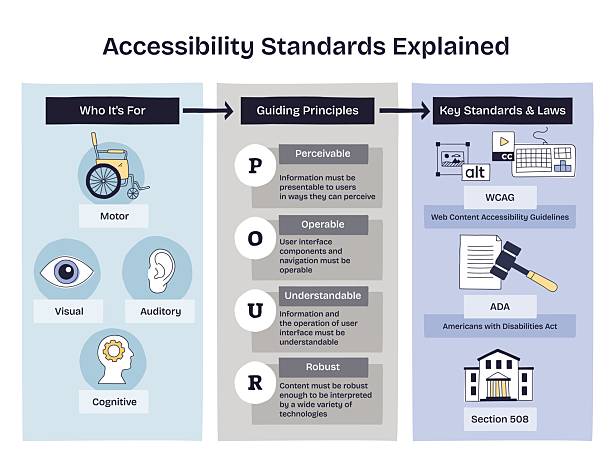
Tapia-Alpaslan explains how ADA requirements are taken into consideration within the design. “For example, very old buildings, like these ones, have bathrooms that are really small. And then if you’re going to renovate every single bathroom, it’s a huge amount of money, so you need to really study and select what you are going to do. Maybe these renovations work better for us, to demolish the buildings and build brand new ones,” Tapia-Alpaslan said. “Sometimes people expect over and beyond, and if we are able to provide over and beyond, then definitely we’ll consider it, but our responsibility is at least to meet that code requirement that ensures safety for everyone.”
These construction projects make it can make it difficult for some, as they are complex and complicated with a lot on the line.
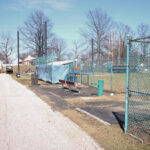
“The construction is just making everything more difficult, and with all the snow, that’s been a nightmare because students have been using the ramps more for some reason,” Hufker said. “Luckily my scooter works with it, but the angle of the homemade ramp to get into the cafeteria doesn’t meet ADA standards because it’s a little too steep.”
When it comes to coordinating the construction of these new renovations and buildings, Tapia-Alpaslan said, “[Everyone] needs to work together, because everyone has their rules to follow. And at the end, you know, it’s like an orchestra. Everyone is doing their part. There is no room for lacking.”
Husker said more understanding of the obstacles is necessary.
“People need to understand that being disabled is not a bad thing and just a different way of life,” Hufker said.